Why Cheap Aluminum Gates Often Fail (and Why Welded Steel Wins Out)
When it comes to driveway gates, you truly get what you pay for. At first glance, lightweight aluminium gates can seem like a bargain – they’re often advertised as low-maintenance and budget-friendly. However, as a metal gates expert, I’ve seen countless homeowners regret choosing a cheap aluminium gate once real-world conditions put it to the test. In this article, we’ll break down the hidden costs and pitfalls of aluminium gates (for both swing and sliding designs) and explain why a high-quality welded steel gate is a smarter long-term investment. The goal is to give you an educational, authoritative perspective – in plain language – on durability, safety, and the true value of your gate. Let’s dive in!
The False Economy of Aluminium Gates vs. Steel Gates
Many homeowners are drawn to off-the-shelf aluminium gates because of the lower upfront price. It’s true – an aluminium gate kit or prefab model from a big-box store will usually cost less than a custom-fabricated steel gate (though as we’ll see, raw aluminium isn’t as “cheap” as people think). The problem is that initial savings can evaporate quickly once you factor in maintenance, repairs, and early replacement.
- Shorter Lifespan & Higher Failure Rate: Aluminium is prone to bending, loosening, or breaking under stresses that a sturdy steel gate would easily withstand. One fence industry expert notes that aluminium pickets and rails are “inherently easier to bend or mangle” than steel equivalents . In fact, the screwed-together joints in many aluminium gate panels create weak points that flex and wear out over time . In practical terms, a cheap aluminium gate might look fine when brand new, but after a year or two of kids leaning on it, pets jumping, or storms blowing through, it can turn into “a bent and mangled mess” . By contrast, a well-built steel gate (especially if galvanized or powder coated against rust) can last for decades. For example, fabricators report that a properly thick steel gate in a mild climate will “last well over our lifetimes” with minimal issues.
- Higher Long-Term Costs: When an aluminium gate fails sooner, you’ll spend money on fixes or a full replacement – wiping out any upfront savings. A cheap gate that you replace twice in 20 years costs more than a quality steel gate that lasts 30+ years. There’s also the hassle factor: constantly tightening bolts, rehanging sagging sections, or dealing with stuck rollers on a flimsy sliding gate. Homeowners frequently find that the “low price” aluminium option was a false economy. As one Trustpilot reviewer lamented about a popular budget gate brand (Aleko), “my Aleko gate has been a nightmare from start till now (two years later)… parts have broken within two years (outside warranty period)” . Not only did this owner endure missing and wrong parts during installation, but they ended up paying for expensive replacement components and repairs shortly after the warranty expired . This kind of story is sadly common with low-end gates. In contrast, our steel gates come with robust welds and quality hardware that virtually eliminate these early failures.
- Aluminium Can Be Pricey for What You Get: There’s a misconception that aluminium is always the budget choice. In reality, high-grade aluminium material itself isn’t cheap – some suppliers note “aluminium is not the cheap option… aluminium costs more than steel when it comes to the raw material” . The only reason some aluminium gates hit a low price point is because they cut corners on build quality: using thinner sections, fewer supports, and bolted (not welded) assembly to keep manufacturing costs down . So you might actually be paying a lot per pound for an aluminium gate, and getting a less robust product. Meanwhile, a basic mild steel gate can often be made for a similar price but will be far stronger and more secure. As one forum contributor succinctly advised a fellow homeowner: “Go with steel for both; it’s considerably cheaper [for similar designs] and the gate motor will easily cope with the extra weight.” In other words, if you’re on a tight budget, a simple steel gate might cost less and serve you better than a fancy-looking aluminium one.
In short, what seems like a bargain upfront can become a money pit. Next, we’ll explore exactly why aluminium gates tend to fail – and the specific ways that steel gates avoid these problems.
Why Aluminium Gates Fail: Wind, Weight and Weak Joints
Real-world conditions in your driveway or garden can be surprisingly brutal on a gate. Wind, gravity, and constant use will test any gate’s design. Unfortunately, cheap aluminium gates often can’t cope with these forces due to their fundamental design and materials. Let’s break down the common failure points:
1. Hinge and Post Failures Under Weight & Wind: A gate isn’t just a static panel – it’s a moving lever attached to posts or columns. When a strong wind catches your gate, or when the gate swings and slams shut, enormous stress is put on the hinges and the frame. Heavy-duty steel gates usually have both the mass and structural integrity to handle these forces (and often use robust hinge hardware welded or through-bolted into solid posts). But aluminium gates are lighter and often connected with weaker fasteners, which can be a dangerous combo. Homeowners in windy areas have learned that even a relatively light aluminium gate can yank itself loose or sag when gusts repeatedly beat on it. In fact, many aluminium fencing companies warn that alignment issues (like a gate dragging on the ground) are frequently caused by loose hinges or post movement after strong winds . One fencing outlet advises to routinely check aluminium fence posts after storms because “high winds…take a significant toll,” often causing posts to shift or even snap out of position if they aren’t absolutely secure .
- A common scenario is hinge bolts pulling out or shearing off. Unlike steel welds, which fuse the hinge to the gate frame, many aluminium gates attach hinges with screws (often self-tapping screws into the aluminium frame or post). Under repetitive stress, those screws loosen and wallow out the holes in the soft aluminium. Eventually the hinge can slip or the bolts snap. (If you’ve ever had an aluminium-framed screen door where the hinge screws strip out, you’ve seen this in action.) In online forums you’ll find DIYers asking how to fix “stripped bolts on [an] outdoor gate” – the upper hinge pulled out and the screws no longer bite, just spin freely in the hole . That’s a typical aluminium failure. The official advice from gate companies is literally to keep tightening these bolts: “Over time, screws and bolts can loosen. Tighten them to prevent the gate from becoming wobbly or noisy.” . Sure – you tighten them, but a few months later you’ll likely do it again as the threads slowly chew the metal away. By contrast, a welded steel hinge or a steel gate hung on J-bolts through a metal post isn’t going to work loose in the same way – it’s a solid integration. It’s telling that even pro-aluminium sources admit a “loose hinge” is a known cause of misalignment and sagging .
- Wind pressure can wreck a poorly built gate. A solid panel gate is like a sail in the wind. If you have a lightweight aluminium swing gate without design features to mitigate airflow, a strong gust can slam it or twist it violently. Steel gates, being heavier and usually stiffer, won’t bend like aluminium. Many steel gate designs also incorporate open patterns (bars, grills, scrollwork) to let wind through, or else the gate is built to slide instead of swing in windy locales. One manufacturer notes that if you insist on a solid privacy design and a swing configuration, you’ll need “high-end and expensive automation equipment” to fight the wind, because even “light-weight” aluminium swing gates struggle with wind load . In fact, that same source says if wind is a major issue, steel gates of certain designs can’t be swing gates at all – they made them sliding gates to avoid a sail effect . The takeaway: wind can be gate-killer, and aluminium gates (especially cheap ones) often aren’t up for the battle. Steel gates, by virtue of material and often weight, tend to resist wind damage better. As TFS Gates points out, steel’s “robust construction” lets it withstand strong winds without compromising integrity . Aluminium gates usually have to be beefier (and costlier) to come close to that level of wind resistance, and most bargain models simply aren’t.
2. “Screwed” Together Instead of Welded: Perhaps the biggest difference in durability is how the gate is constructed. Quality steel gates are typically welded at all joints by skilled fabricators. Welding fuses the metal parts into one continuous piece – essentially as strong as a one-piece frame. Cheap aluminium gates, on the other hand, are often bolted or screwed together from pre-cut pieces to save manufacturing costs. Think of it like flat-pack furniture versus a solid wood dresser; bolts can never achieve the strength of a seamless join.
- Welded joints vs. Mechanical Fasteners: A well-executed weld distributes loads across the entire joint with no play or movement. By contrast, a screw or rivet focuses all the stress on that small point and can act like a hinge if it loosens. It’s no surprise that aluminium fence panels “allow more flex” at the connections specifically because they are screwed, not welded . An industry blog explains that the very feature that gives aluminium fence panels adjustability (screwed pickets that can pivot) also “makes for a weaker connection point” in terms of strength . I’ve seen aluminium driveway gates where the horizontal rails started rattling and the pickets wobbled because the factory screws loosened just a tad – enough to introduce play. Once there’s a bit of wobble, every opening and closing works those screws more, and soon the gate feels like it might fall apart. In one illustrative review, a homeowner who assembled an aluminium gate kit noted that “due to all the parts and components, the gate is not all that stable.” They found the assembly “tedious” with many pieces, and ultimately the finished product lacked rigidity (in their words, “not all that stable”). This is a common trade-off: modular aluminium gates are easy to ship and assemble, but each bolt is a potential point of failure.
- Shear and Fatigue: Every time your gate swings, the connections bear load. A steel weld can handle repetitive cycles for decades. A screw in aluminium might slowly carve a larger hole (aluminium is soft compared to steel) or the screw itself might corrode or fatigue. Imagine a swinging garden gate gradually sagging – with a welded steel frame, you’d likely bend the post before any weld breaks. With an aluminium frame held by screws, it’s usually the screws or brackets that give out first. We’ve repaired “sagging” aluminium gates where the culprit was literally sheared bolts at the hinge or cracked screw flanges. In one case, a heavy-duty aluminium gate sagged because the bolts anchoring the hinge to the post had sheared off under stress . This kind of failure is virtually unheard of in a properly welded steel gate – there are simply no bolts to shear.
- Maintenance Nightmare: The need to constantly check and tighten hardware on aluminium gates cannot be overstated. Even manuals suggest routine tightening of all screws/bolts . If you forget, you might find your gate literally coming apart at the seams. Welded steel gates, by contrast, don’t require this kind of periodic TLC for their structure (you may need to oil a hinge or touch up paint, but the frame stays solid). For busy homeowners who just want the gate to “work” every day, a welded gate is far more set-and-forget. An aluminium gate held together with dozens of screws is a bit like a car that constantly needs its bolts re-torqued – not a confidence-inspiring design.
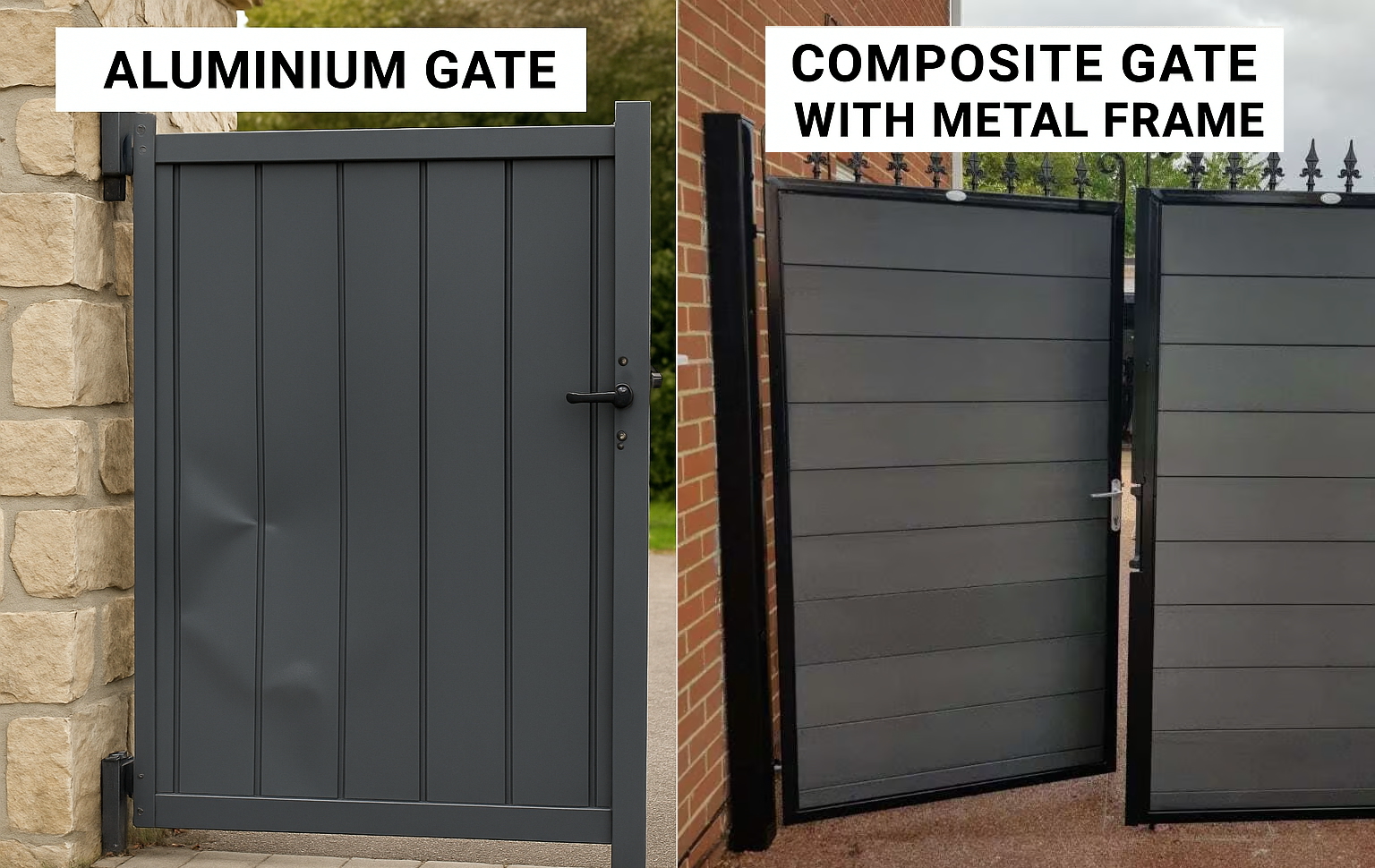
3. Thin Material = Flimsy Feel and Appearance: Aluminium’s lightweight nature means manufacturers often use thicker sections to reach adequate strength – but not always. Some cheaper gates simply use very thin-wall aluminium extrusions to cut cost and weight. The result is a gate that may flex visibly if you push on it. Customers sometimes complain that aluminium gates feel “flimsy” or look “spindly” compared to iron or steel gates. One fencing expert put it bluntly: the light, non-rusting aspect of aluminium is “a bit of a detractor when it comes to strength”, and that a light-duty aluminium fence may look nice new but won’t hold up to real life impacts . In more relatable terms, if you lean a bicycle or wheelbarrow against a flimsy aluminium gate, you might dent a rail or cause it to bow. A steel gate, on the other hand, can take that abuse.
Aesthetically, thin aluminium gates can also look insubstantial. Homeowners have noticed that some off-the-shelf aluminium driveway gates just don’t have the heft you’d expect for a secure entry. As one gate company wisely said: “A well-made and substantial looking gate with a strong foundation and post is more of a deterrent than a flimsy, lightweight one on wimpy looking posts” . Criminals or intruders can tell the difference at a glance. Even if aluminium can be made as strong on paper, a gate that visibly flexes or rattles isn’t giving anyone peace of mind. By contrast, a custom steel gate conveys security – it’s solid, doesn’t wobble, and often is paired with robust posts that won’t budge.
To be fair, not all aluminium gates are flimsy. High-end manufacturers do make aluminium gates with reinforced profiles, internal ribbing, or partial welding, which can be quite sturdy. However, these tend to cost as much as (or more than) a comparable steel gate . If you’re going to pay a premium for a heavy, well-built aluminium gate, one has to question: why not just get steel and avoid the material’s limitations altogether? Steel gates can be crafted to look just as good, and modern coatings prevent rust for many years. Unless weight (for automation or manual handling) is a critical issue, steel often gives more bang for your buck in terms of strength.
Real Customer Experiences: Aluminium Gate Letdowns
Perhaps the most telling evidence comes from homeowners who have owned aluminium gates. Let’s look at a few real-world comments and complaints, which highlight the common issues:
- “Not All That Stable”: A customer of a well known UK aluminium gate supplier, who bought a DIY aluminium gate kit reported that “due to all the parts and components, the gate is not all that stable.” They found assembly difficult with “lots of parts” and in the end the gate had a wobbly quality. This echoes what we discussed about bolted construction – the more pieces and screws, the more points of weakness. A gate should feel like one solid piece; if it feels like an assemblage of bits, that doesn’t inspire confidence in its longevity.
- “It’s not a gate you’re going to keep people out with”: In a candid review on another website, a purchaser of a budget driveway gate (an imported kit) wrote: “It works perfect for what it is – [but] don’t expect to use it as a driveway gate that you use very often.” He basically admitted the gate is more for looks or for light duty (keeping small dogs in the yard), but not something he’d count on for security or daily heavy use . This is quite damning: the gate visibly could not withstand frequent operation or any serious force. Customers shouldn’t have to temper their expectations like this after buying a gate! By comparison, I’ve never heard someone who installed a proper steel gate say, “Well, it’s great – just don’t open it too often or it might break.” You expect a steel gate to function reliably day in and day out – and they do.
- Broken Parts and Poor Support: We already mentioned the Trustpilot reviewer who had parts breaking within 2 years on an aluminium gate. There are many similar stories: gates that sag prematurely, latches that don’t line up due to warping, hinge brackets snapping, etc. Even the best aluminium gates can suffer if not installed perfectly on a plumb post with proper support. One UK homeowner on a forum noted their previous steel fence lasted 30 years, whereas their neighbor’s aluminium fence started having issues in 2 years (though the aluminium didn’t rust, it did loosen and lean) . Of course, individual mileage may vary, but overall the trend is that aluminium gates require more care to stay in top shape. If you’re unlucky, you might also deal with unhelpful customer service from the manufacturer when things go wrong (as the Aleko reviewer did ).
- Gate Kits vs. Custom Gates: It’s worth noting that many negative experiences come from prefabricated aluminium gate kits sold online or in stores. These are mass-produced and designed to hit a price point. Custom-fabricated aluminium gates (made by local gate fabricators) could be better, but they often cost as much as custom steel anyway. The kits tend to use thinner material and are optimized for shipping weight. For example, one popular brand’s 15-foot “steel” gate kit was reviewed as “very light, which I expected with the low price” – indeed it turned out to be shorter and flimsier than advertised. If even some so-called steel kits are that lightweight, you can imagine the all-aluminium kits. When comparing, a lot of homeowners realize the steel gates sold by quality manufacturers are fully welded and much heavier-duty – a different class of product entirely.
In summary, homeowner feedback consistently points to aluminium gates being more finicky. They may serve fine for a while, but if anything is going to act up, it’ll likely be the aluminium gate over the steel one. This is especially true for swing gates, which endure more stress (sliding aluminium gates put less torque on hinges, so they can sometimes fare better if the track is well-built – but they are still vulnerable to dents and bending).
Material Face-Off: Steel vs. Aluminium at a Glance
To consolidate what we’ve covered, here’s a quick comparison table highlighting key differences between high-quality welded steel gates and typical aluminium gates (especially the lower-cost, bolted variety):
| Feature | Welded Steel Gate | Bolted Aluminium Gate |
| Strength & Durability | Extremely strong and rigid. Can take impacts (e.g. a leaning bike or a push from a person) without bending. Welds create a monolithic structure that distributes stress. Steel frames at adequate thickness rarely deform under normal use . | More prone to bending or denting, as aluminium is softer and lighter . Joints held by screws can flex or loosen, making the gate less rigid . Not ideal for high-impact or high-traffic use without reinforcement. |
| Wind Resistance | Heavy weight plus open designs (bars/spaces) help steel gates stand firm in wind. Less likely to rattle. Steel gates can also be made as sliding types for solid panels to mitigate wind load . Overall highly resistant to wind damage . | Lightweight – can sway or slam violently in wind if solid or broad surface. Must allow airflow or use strong automation to avoid wind issues . High winds may cause misalignment or hinge loosening if posts/hinges aren’t extremely secure . |
| Joining Method | Welded at all critical joints (frame corners, pickets, hinges). No moving fasteners in the structure – results in a solid, one-piece feel. Welds (done by skilled pros) equal or exceed strength of base metal. | Bolted or screwed together. Many separate components (rails, pickets, brackets) held by fasteners. Each fastener is a potential weak point that can loosen over time . The structure has more “give” and may wobble if screws are not constantly tight. |
| Maintenance | Needs minimal structural maintenance. Periodic painting or touch-up to prevent rust, lubrication of hinges, and that’s usually it. A well-fabricated steel gate can function for years with little attention. | Requires checking/tightening of bolts periodically . Hinges, latches may need adjustment as screws loosen. Aluminium doesn’t rust, but corrosion can still occur (white oxidation); finish may chalk over time. Overall, more ongoing tinkering to keep gate aligned and quiet. |
| Aesthetics & Perception | Thick, solid appearance. Often custom-made with ornamental designs – can look elegant and formidable. Conveys security and quality. Even simple designs appear “substantial” (no visible flimsy elements) . | Can look sleek and modern (many styles/finishes available), but inexpensive models sometimes look thin or “wimpy.” Flexing or rattling parts give a cheap impression. Some aluminium gates mimic wood or iron looks nicely, but others clearly broadcast “lightweight”. |
| Security | Difficult to breach. Heavy weight and rigid construction resist tampering. Hard to bend or break without tools. Welded steel pickets can’t be removed easily (often pressed through solid top/bottom bars or welded in place). | Provides basic deterrence, but not as robust. A determined intruder could possibly bend a bar or, in some designs, even unscrew a panel (one source notes someone with a screwdriver could undo an aluminium fence panel’s screws and lift out pickets ). Not all designs allow that, but it highlights the general security gap. |
| Weight Considerations | Much heavier – requires strong support posts and proper hinges. Manual opening can be harder for large gates (often paired with automatic openers). The weight can actually be an advantage in stability, but it’s a factor for installation and hardware choice. | Light weight – easy to ship and install DIY. Puts less strain on gate motors and hinges initially. However, light weight also means less inertia to resist things like a kicking animal or pushing crowd. Weight advantage for ease, disadvantage for resilience. |
| Cost | Higher upfront for custom fabrication and quality metal. Steel prices fluctuate, but generally, a bespoke steel gate is a significant investment. However, considering lifespan (30+ years possible) and low maintenance, lifecycle cost can be very favorable. | Lower initial cost for standard designs or kits. Material can be expensive, but savings come from faster production (no welding labor) and cheaper shipping. High-end aluminium gates cost as much as steel, but budget ones are available. Lifecycle cost tends to rise with maintenance, part replacements, or earlier need for replacement (lifespan often 15–20 years or less for cheap models). |
As shown above, steel gates excel in strength, durability, and long-term value, whereas aluminium gates prioritize low weight and low maintenance (no rust) at the expense of robustness.
Don’t Let Appearances Deceive You
It’s easy to be wowed by glossy brochures or displays of aluminium gates touting their modern designs and “rust-proof” nature. Indeed, aluminium gates come in many attractive styles and finishes (powder-coated colors, woodgrain looks, etc.). And yes, aluminium doesn’t rust – a point often made in marketing. But remember, rust is only one form of deterioration. Aluminium can corrode (it forms a chalky oxide) and, more commonly, it can mechanically fail (bends, breaks) long before any material “rots away.” Steel can rust if not protected, but a well-painted or galvanized steel gate can avoid serious rust for decades. In fact, one coastal homeowner was recommended an aluminium gate to avoid rust stains on a modern home , which is a valid use-case – but that was a specific situation (high salt environment) and the gate was custom-built to be sturdy despite being aluminium. For most homeowners not on the ocean, rust can be managed on steel with proper coatings (and occasional touch-ups), so it shouldn’t be the sole deciding factor.
Think about what you want your gate to achieve: security, privacy, curb appeal, and longevity. If security and longevity are top priorities, it’s hard to overlook the benefits of steel. As one fencing company wrote in their blog, “while aluminium gates offer lower maintenance… steel gates provide better strength, durability, and security features.” This matches the consensus of professionals. Aluminium gates have their place – they’re great for zero-maintenance modern designs and when weight is a concern (e.g. an extremely large double gate where heavy steel would strain openers or the supporting structure). They’re also immune to the kind of red rust that can stain driveways (aluminium oxide is white/gray and less conspicuous ). So if you absolutely hate any thought of touch-up painting, or live by saltwater, a high-quality aluminium gate might serve you well. Just be prepared to invest in a well-made one and keep an eye on those joints.
For the average homeowner inland, though, I’d advocate strongly for steel. The peace of mind knowing your hinges won’t rip out, your frame won’t buckle, and your gate can withstand a gale or a bump is worth the slightly higher upkeep of checking for rust spots. Modern steel gates can be powder coated and even zinc galvanized before painting – they can truly shrug off the elements for a very long time (many come with 10 or 20-year warranties against rust-through). And if you love a particular style, note that almost any design achievable in aluminium can be replicated in steel by a skilled fabricator. Steel is more forgiving to weld and work with when doing custom shapes (aluminium requires more specialized welding). So you have ultimate flexibility with steel.
Let’s not forget the feel: A steel gate closes with a satisfying weight and firmness. No rattles, no quiver. That tactile quality every time you use your gate is hard to quantify, but you’ll appreciate it each morning as you swing it open or each night when it thuds shut solidly. In contrast, a loose aluminium gate that clanks in the wind or wobbles if you push on it can become an annoyance.
Conclusion: Invest in Quality for the Long Haul
Your driveway or garden gate isn’t just another decoration – it’s a working structure that guards your home’s entry day in and day out. Cutting corners with a cheap aluminium gate may save a bit initially, but you risk headaches from sagging, sticking, or outright failing gates a few years down the line. The more durable choice by far is a welded steel gate, crafted by experienced professionals and installed with sturdy hardware on solid posts. Such a gate will stand strong against heavy use and harsh weather, proving its worth over decades.
That said, if you’re set on aluminium (perhaps due to a coastal climate or a specific contemporary look), choose wisely: opt for a reputable brand or fabricator that uses thicker aluminium sections and preferably incorporates welded joins in critical areas. Be prepared to perform minor upkeep like tightening things and aligning as needed – and understand the limitations (no gate is truly zero maintenance despite marketing claims).
For homeowners who demand security, longevity, and true premium quality, a steel gate is often the better purchase. Yes, steel gates are typically a bit more expensive upfront, but as we’ve shown, they pay you back by enduring year after year with minimal issues. The old saying “buy nice, or buy twice” applies here. Spend a little more now on a quality steel gate made by skilled welders, and you likely won’t be shopping for a replacement anytime soon – unlike the neighbor down the road cursing as his bargain aluminium gate sags off its hinges.
In summary, don’t be fooled by the initial price tag. Consider the total cost of ownership and the performance you need. When real-world elements like wind, gravity, and frequent use come into play, a strong welded steel gate will far outperform a cheap aluminium one that “tends to fail quickly and cost more over time when considering maintenance and replacement,” as many frustrated customers have learned. Your home deserves a gate that is as tough and dependable as it is beautiful. Choose wisely, and you’ll have one that serves you proudly for generations.